Quotes about the Gospel of John:
- “John was a special witness, but we ought all to be witnesses to complete the chain of testimony. “Every Christian should reckon that he is sent from God to bear witness to the great light that through Him people might believe. “Charles Spurgeon
Baptizer’s Testimony
Read John1:19-28 – Ask yourself:
- Vs. 19 – …when the Jews from Jerusalem sent priests and Levites… Who are “the Jews”?
- The term “Jew” was first used in the Babylonian captivity 587 BC
- They came from Judah, so the Babylonians called them Jews.
- At this time there were only 2 dominant Israelite tribes in Judah. Judah (The tribe Jesus came from) and Benjamin. The 10 tribes were scattered, and the northern area were Samaritans, which the Jews hated.
- Vs. 19 -26 – John the Baptist denied he was the Christ, Elijah, or a prophet. He said, “I am the voice of one crying out in the wilderness, make straight the way of Yahweh, as the prophet Isaiah said”. Isaiah 40:3. Who was John the Baptist?
- Commentary on who John the Baptist was by David Curtis
- John the Baptizer was a hereditary priest. Meaning he inherited this from his father Zechariah who served as a Temple priest. As well his mother was from the High Priestly family of Aaron. Luke 1:5. His parents were elderly and could have died when he was a child. Since the son of a priest us unlikely to have grown up living rough in the wilderness, he could have been brought up by the Priestly Essene community living near Ein Gedi. It is possible he was raised at Qumran in a community of priests called sons of Zadok. These priests had separated themselves from the established priesthood in Jerusalem. The sectarian documents at Qumran (Dead Sea Scrolls) indicate that the community adopted orphaned children of priests. He lived apart from the religious system of Israel in and around Judah.
- “Behold, I am going to send My messenger, and he will clear the way before Me. And the Master, whom you seek, will suddenly come to His temple; and the messenger of the covenant, in whom you delight, behold, He is coming,” says Yahweh of hosts. Malachi 3:1
- Malachi is the last book in the English version of the OT and one of the last prophets to speak to the Israelites for next 400 years. Now John appears and the religious leaders of the day are curious.
- A King is coming: In ancient times when a king was going somewhere to visit, he would be preceded by someone to herald his arrival, a messenger. Telling everyone the king is coming. That messenger would say, “Prepare the way. Make straight the path.” That meant the king was coming. The roads in those days were terrible, so when the messenger came that was a clue for the people of the town to get busy and repair the road so that the king could travel through. That is the imagery here with John the Baptist as the messenger; in effect he says, “The King is right behind me, so get your road straight. Get your path prepared. He is coming.”
- During the time John the Baptist was preaching in the wilderness, before Jesus came on the scene, his message, and baptizing was turning into a huge revival for the people. A movement, and everyone wanted to know who this man was. The Roman occupation had heightened the people of Judah and surrounding areas of the Messiah. They were looking for Him now more than ever.
- This “revival” is confirmed by the Jewish historian Josephus who said, “Now many people came in crowds to him, for they were greatly moved by his words.”
- Some commentators estimate that there could have been between 200,000 and 500,000 people who participated in John’s ministry.
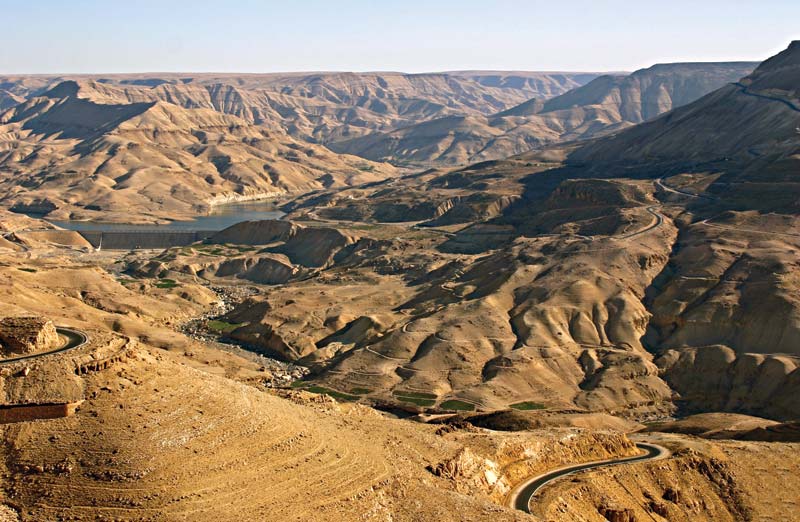
- He was baptizing in the Jordan River and people were desperate to see him and hear his message. The trip from Jerusalem to the Jordan River was not just right outside the city or an afternoon trip. It was 20 miles from Jerusalem to the Jordan with a 4,000-foot drop. Imagine a 20-mile, 4,000-foot drop trip down to the river. As hard as that was, the trip back was doubly hard. This mass of people was making this incredible journey to identify with the message of John the Baptist as he prepared the way for the coming of the Christ.
- Because there had been a silence for over 400 years the people viewed John as a prophet and were willing to do whatever it took to meet him and be baptized by him. John the Baptists was a prophet. One like Elijah
- Vs. 24-25 The Religious Leaders ask again “if you are neither the Christ, nor Elijah, nor a prophet then why are you baptizing?” Here is what Jesus said about John the Baptizer.
- Matthew 11: 13-14 and 17:10-13 – Jesus reveals who John was.
- Vs. 26 – John still did not know who Jesus was. He had not come to him yet.
- Vs. 27 – “He who comes after me”—referring to Messiah. “The thong of whose sandal I am not worthy to untie”— explaining this, Leon Morris writes, “To get the full impact of this we must bear in mind that disciples did do many services for their teachers. Teachers in ancient Palestine were not paid (it would be a terrible thing to ask for money for teaching Scripture!). But in partial compensation disciples were in the habit of performing small services for their rabbis instead. But they had to draw the line somewhere, and menial tasks like loosing the sandal thong came under this heading. [Leon Morris, The Gospel According to John: Revised Edition, p. 123]. Rabbi Joshua ben Levi (A.D. 250) taught, “All manner of service that a slave must render to his master, the pupil must render to his teacher—except that of taking off his shoe” (cited by Andreas Kostenberger, John (Baker), p. 650).
- Vs. 24-25 The Religious Leaders ask again “if you are neither the Christ, nor Elijah, nor a prophet then why are you baptizing?” Here is what Jesus said about John the Baptizer.
- Vs 28 – Historical study of location – Bethany means “Place or house of grace”.
- Some ancient texts list the name as Bethabara (place of the crossing). Since no town of this name has ever been discovered in any text or any archaeological site, most scholars believe this name indicates that this was the site that the children of Israel used to cross the Jordan River when they first entered the Promised Land.
- This Bethany is not the one southeast of Jerusalem (John 11:18), but the town across Jericho across the Jordan River on the eastern side.
 Crack A Bible