Quotes about the Gospel of John:
- “Christ knows the heart of all men. He is fully aware of our corruption, our depravity. He doesn’t need anyone to tell Him the condition of man.” – David Curtis
Jesus Cleanses the Temple Only Once
Read John 2:13-23 – Ask yourself – The passage seems out of place with the chronology we have read thus far. Why is this passage here?
- The other gospels have this event at the close of Jesus’ ministry. Many scholars believe there were 2 cleansing of the Temple. The text just does not lend itself to this conclusion. All gospels talk about this event and all have some of the same details. It is highly unlikely this is a second event. A.W. Pink’s commentary explains.
- Matthew 21:12-13 – Matthew places the cleansing at the beginning of Passover week. John 2:13 says the Passover was at hand.
- Matthew 21:12, Mark 11:15 and John mention pigeons sold.
- Both Matthew and John tell of Jesus overthrowing tables of the moneychangers.
- Both Matthew and John say specifically that Jesus “drove them out” Same Greek word in both gospels.
- Matthew records Jesus’ quoting Isaiah 56:7 and John records him saying “My fathers house”. More than likely Jesus said both, but John is making sure the reader understands Jesus is God.
- Matthew 21:23 records Jesus returned to the Temple the next day and the chief priests asked Him, “By what authority are you doing these things” and John records in 2:18 What sign do you show us for doing these things”?
- Why does the writer of John take this out of its chronological order and put it after the water to wine miracle? The stone pots and the water for cleansing represented the Old Covenant and Jesus was the new Covenant and represented what was about to change. The Mosaic Age was dying, the Priest of God had not held to God’s commands and with Jesus among them and soon to be crucified the Messianic Age was coming into existence.
- The Jews as the writer of John calls them were the enemy of Christ and they were not following God’s commands and had turned His house into a marketing place, full of swindling deals and crooked merchants of the Temple. This was a Theocratic society and the Chief Priest (The Jews as the gospel of John calls them) were exploiting the people to line their own pockets. Jesus was displaying righteous anger by cleansing. Show the new and true Israel was it their midst. John 2:23 shows that after this cleansing of the Temple “many believed”.
- His disciples remembered that it was written “Zeal for your house will consume me”. The disciples knew Scripture and thought of Psalms 69:9.
- David Curtis in his commentary on this verse says this; Psalm 69 is a Psalm of David. It is a prayer for his deliverance, due to his piety. The Psalm speaks of David’s imminent danger due to the enemies of God who hate him for his fervent devotion to God. Several verses in Psalm 69 seem to point to the death of the Messiah. The early church saw Psalm 69 as a Messianic Psalm prophesying the death of Jesus. The writer of John changed the quotation from the past to the future tense, implying that it was a prophecy concerning David’s great Son. He undoubtedly saw it as such. In cleansing the Temple Jesus fulfills a prophecy that our Lord’s zeal for His Father’s house will bring about His death, and the writer of John in 2:17 draws our attention to this point.
- The Chief Priests, these “men of God” who the Jewish people looked up to were blind and corrupt. Standing before was their messiah and they had no clue.
- Vs. 19 -21 – Jesus says, “Destroy this Temple and in 3 days I will raise it up”. Why did He say, “destroy this Temple” and not I will destroy this Temple?
- When the Chief Priest and rulers of Judah asked for a sign, they did not expect Jesus to say, “Destroy this Temple and in 3 days I will raise it up”, but that was the sign they would get to His messiahship. He was the Temple as vs. 21 says, but these Scholars of Scripture had no clue once again. The Temple would be destroyed, but that did not happen until AD70.
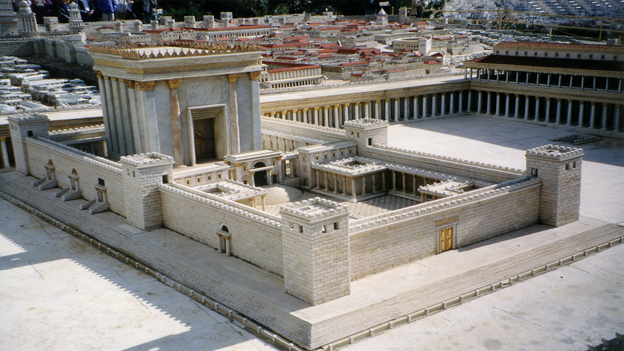
- “It has taken forty-six years to build this Temple…” The Temple of Jesus day was still not finished.
- This Temple was called Herod’s Temple or the second Temple. Solomon’s Temple, the first Temple, was destroyed by the Babylonians when Judea was taken into captivity. When the “Jews” as the Babylonians called them were able to return to Judea, they rebuilt the Temple, but it was very small and not at all like the original Temple of Solomon’s day.
- “Religious worship and Temple rituals continued during the construction process. An agreement was made between Herod and the Jewish religious authorities: the sacrificial rituals were to be continued unabated for the entire time of construction, and the Temple itself would be constructed by the priests. This is the reason Herod’s Temple is still counted as the Second — functioning did not stop, although it was the third building fulfilling the purpose”. (Data and Duration https://en.wikipedia.org/wiki/Second_Temple)
- Herod the Great was the governor of Jerusalem. Herod the first. He was the man that ordered the execution of all male children in and around Bethlehem because of the rumors of Jesus being the new King of Israel. The Temple was there before Herod, but it was very small, as stated above and with the influx of Jewish people and proselytes from all over the Roman Empire coming during the Jewish festivals he had to rebuild and expand it. During the different festivals throughout the year the population would swell to over 1MM people coming for sacrifices and worship.
- The Plaza of the Temple was 480 X 300 meters, about the size of 6 football fields. The walls surrounding it were about 16 feet thick and 20 stories tall. The stones that made up the walls weighted from 2 to 100 tons. There was no mortar between the stones, yet it was said, they set so close together that a piece of paper could not be put between them. An engineering marvel. A building of white marble and gold, with bronze entrance doors. It was said that it was difficult to look at the Temple in daylight because it was blinding. The attention to detail in its construction is exemplified by the placing of solid gold spikes on the roof line of the building to prevent birds from sitting on the Temple and soiling it.
- Before work began Herod spent 8 years stockpiling materials for its construction and used a work force of over 10,000 men and 1,500 priests to setup the Holy of Holies. Building of the Temple continued even after Herod the Great’s death. It took 60 years and was complete in 63AD before God destroyed it in 70AD.
- Vs. 23 – 25 – Many believed in His name. That means they became Christians that day, but Jesus would not entrust Himself to them for He knew all people and their hearts. Many believed because of the signs and wonders they saw, but Jesus knew the evil in their hearts. Vs. 25 He needed no one to bear witness about “man”, for He Himself knew what was in “man”. This is the writer of John subtle way of appealing to his audience to believe that Jesus was God. His true nature and knew without the saving power of the Holy Spirit through Jesus the Christ all men are evil and condemned.
 Crack A Bible